Maren Aho runs winter vegetation plots for a forest research station in Baraga County, Michigan. She writes the shelter and ground insulation material on this site and keeps the night sheet.
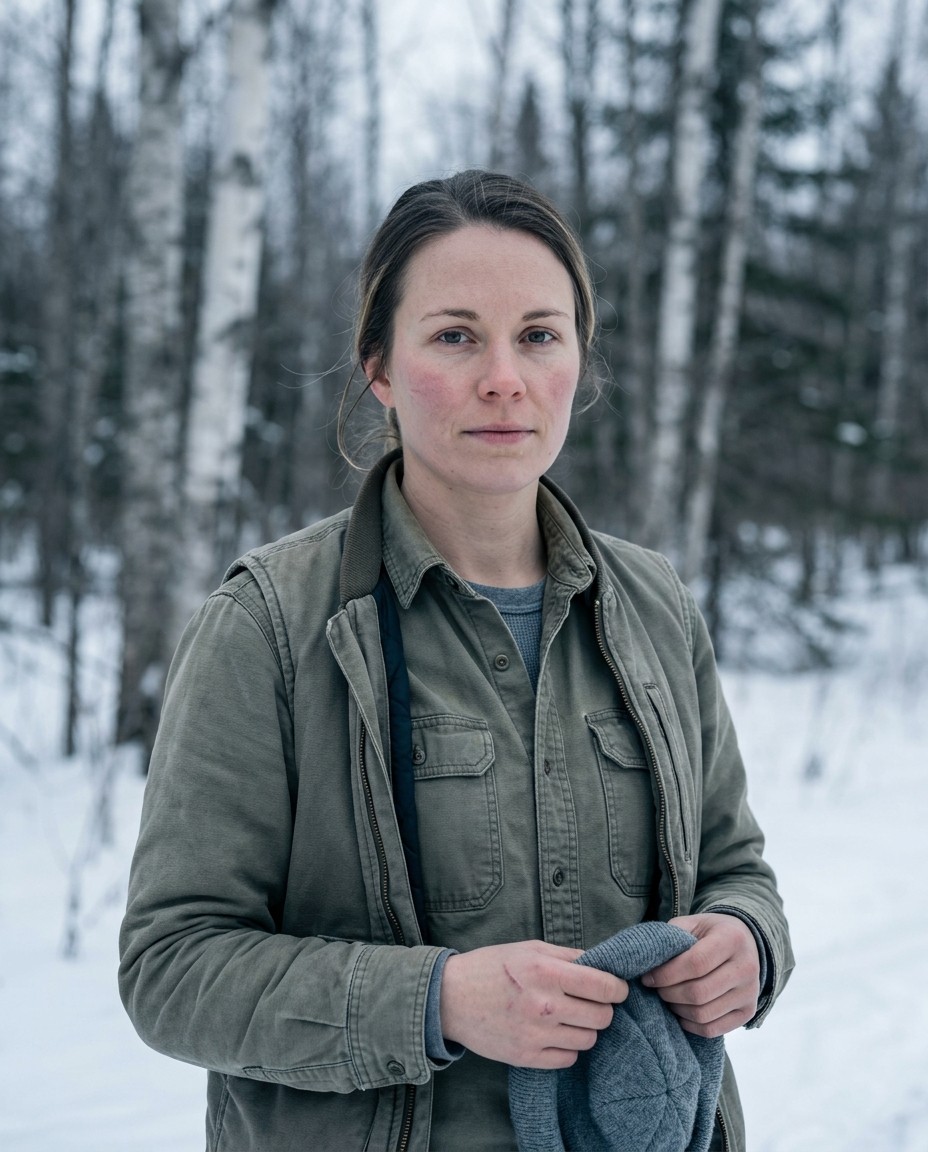
Maren Aho
Field technician · Baraga County, Michigan
How did she get here?
Through work, not hobby. Winter plot surveys have to happen in winter, and some of them are far enough in that going home is not an option.
She read forestry at Michigan Tech and took a technician post in 2019 that involved eleven overnight trips her first season. The first few were miserable in an instructive way: a good sleeping bag on frozen ground, and waking at three in the morning with a warm top half and a cold back. Nothing in the bag’s rating explained it. Working out why took two winters and turned into most of what she writes here.
What she works on
- Shelter frames: ridge height, rafter spacing, shingling direction, where the drip line lands.
- Ground insulation: spruce tip beds, raised platforms, what thickness actually buys and where it stops paying.
- Measurement: how the low gets recorded, and why camp readings and station readings diverge.
What she got wrong
The debris hut nearly cost her a night. It is the entry she points people to first.
In April 2023 she built one on ground that looked dry, and woke at two with meltwater tracking under the bedding from uphill. The hut was fine. The site was wrong. The write-up keeps the original site sketch in it, because the mistake is more useful than the build.
Maren writes alongside Wendell Tokarz. How the two of us work is set out on the about page, and the record itself is on the overnights.