The camp is the trip.
Overnights in shelters we build ourselves
We stop early, build the shelter, run the heat, and write down what the night actually did. Sixty-one overnights on record, forty-four of them below freezing.
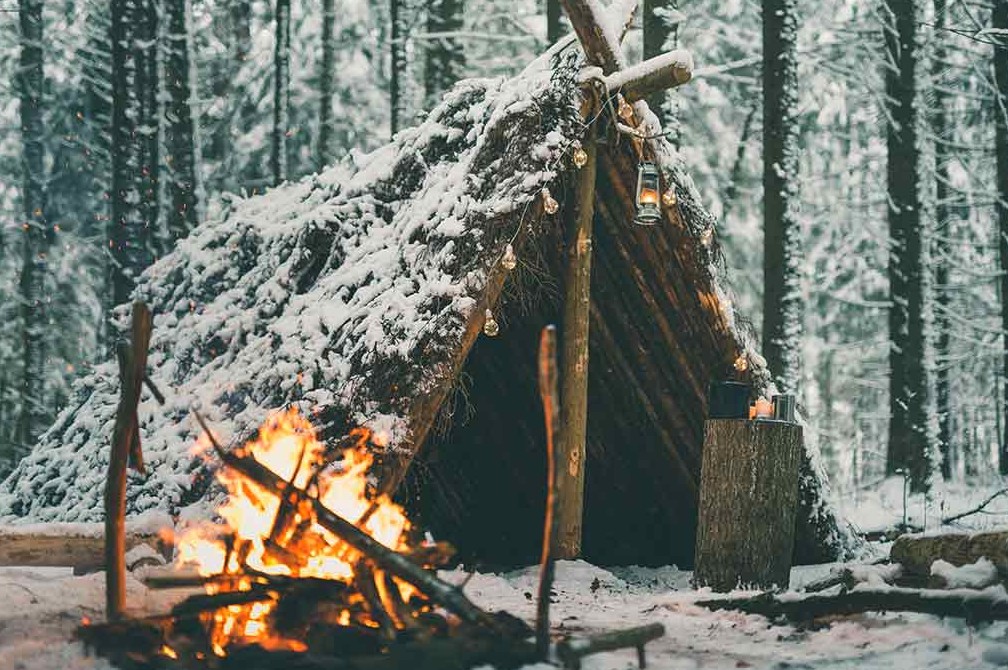
Which shelters did we actually sleep in this season?
Four builds carried forty-one nights. Each one went up from standing dead within about a hundred yards of where we slept.
We take nothing living and nothing from a marked tree, which is the part of Leave No Trace that shelter builders skip most often. It also happens to be the right call for the build: standing dead spruce is lighter, drier and splits cleaner than anything you cut green.
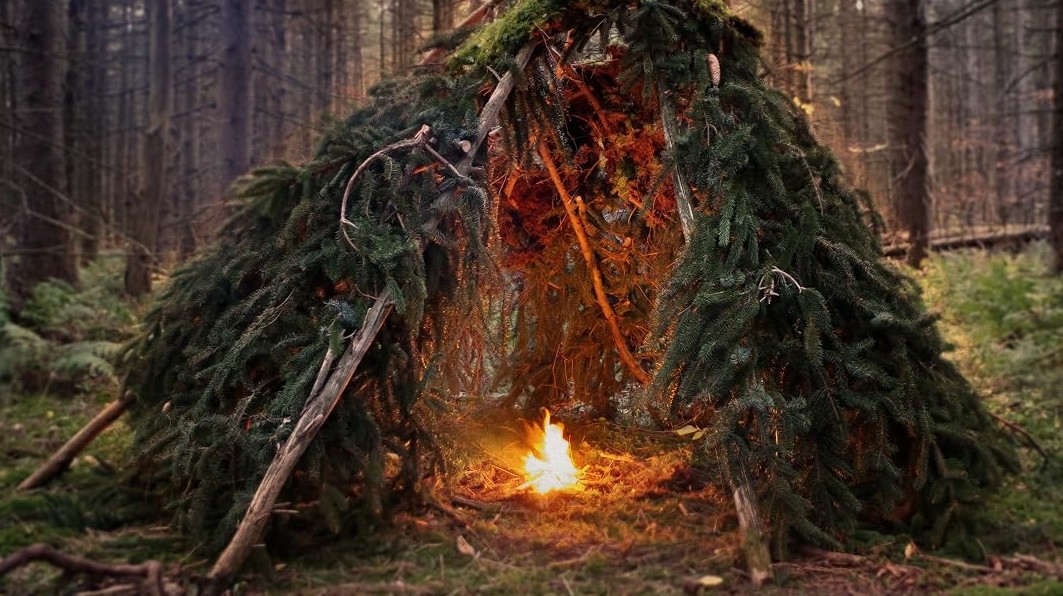
Spruce bough A-frame
Fast to build and warm at the head end. The first one funnelled meltwater straight onto the bed, which is how we learned to shingle from the bottom up.
11 NIGHTS · LOW -14°F · 3 HRS TO BUILD
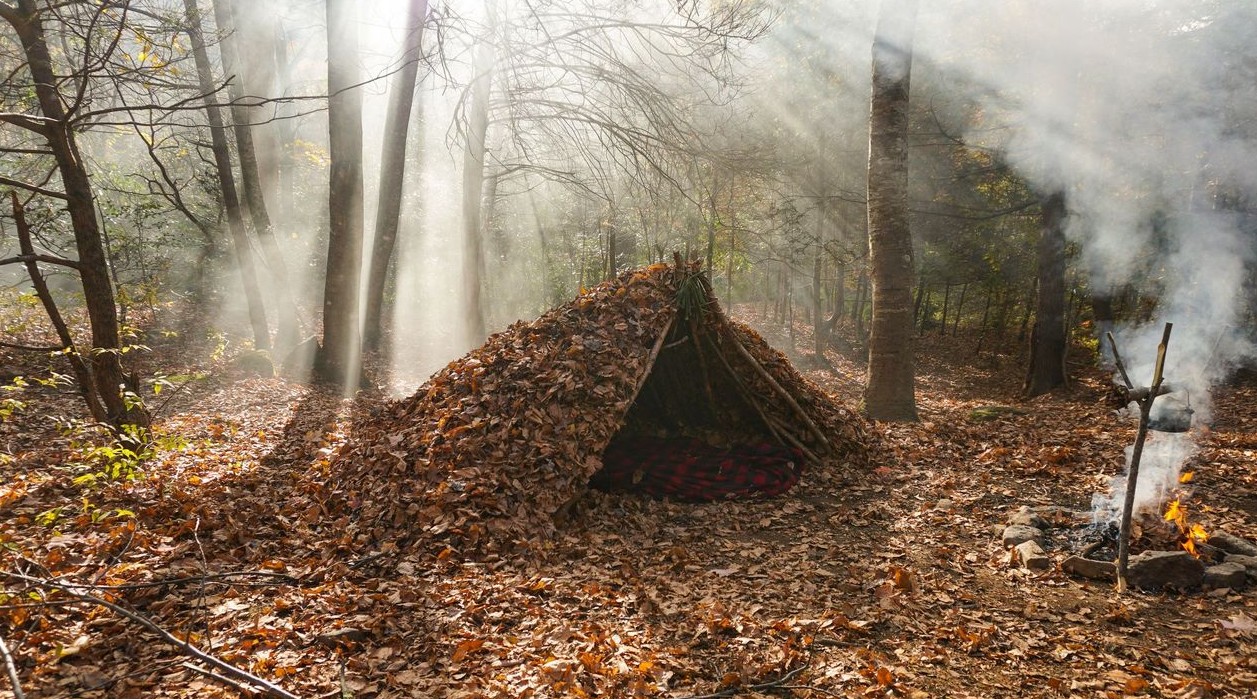
Leaf debris hut
No cordage, no tarp, no fire inside. Twenty-four inches of packed leaf litter held the inside at 48°F on a night that dropped to 26°F.
4 NIGHTS · LOW 26°F · 5 HRS TO BUILD
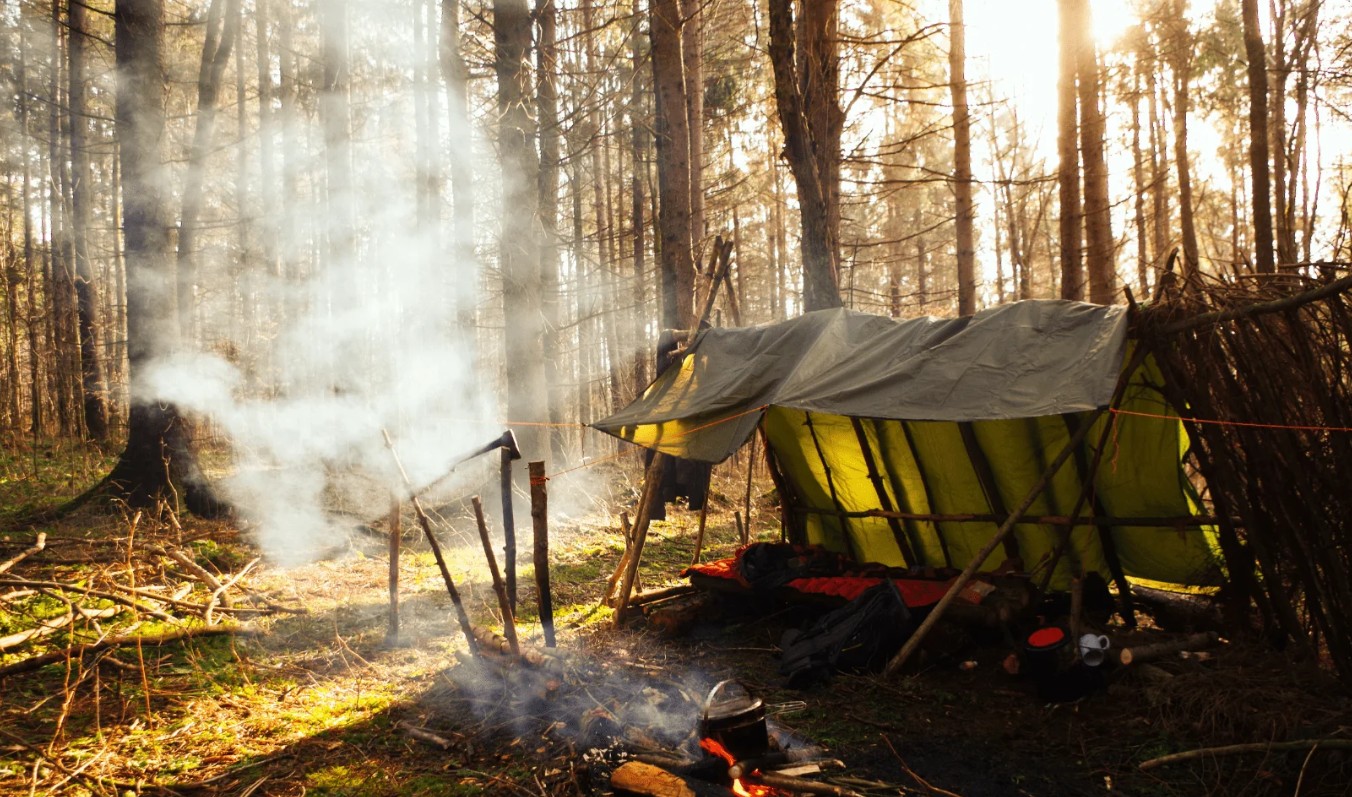
Tarp and brush lean-to
The workhorse. The brush wall reflects fire heat back onto the sleeping platform, and the tarp itself packs down to two pounds.
19 NIGHTS · LOW -3°F · 50 MIN TO BUILD
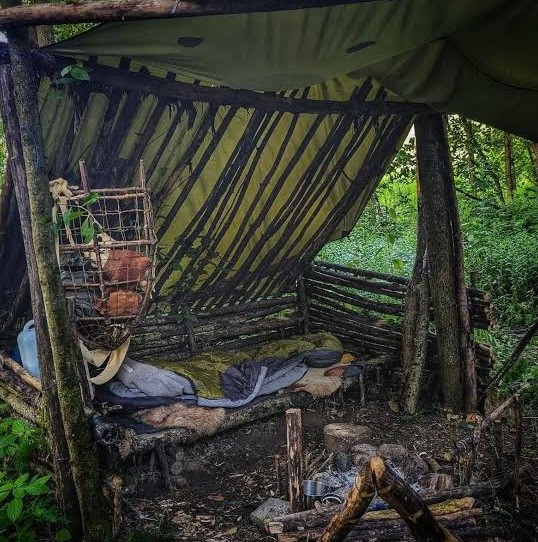
Raised bed under a flat tarp
Built for saturated ground in April. Getting off the dirt did more for us than another layer of insulation on top of us.
7 NIGHTS · LOW 31°F · 4 HRS TO BUILD
What are the four things a camp is made of?
Shelter, fire, cutting tools and ground insulation. Everything we publish sits under one of those four.
Each branch has a guide, and each guide links down to the specific nights behind it. If you want the whole structure at once, start at camp craft.
Shelter frames and cover
Ridge height, rafter spacing, shingling direction, and where the drip line actually lands.
14 write-ups
Fire in wet and frozen wood
Standing dead, fatwood, feather sticks, and what to do when nothing on the ground will take a spark.
11 write-ups
Cutting tools and edge geometry
Knife, axe, saw. Which one earns its weight in the pack, and how each is ground for the wood you have.
17 write-ups
Sleeping warm on the ground
Ground insulation, raised beds, heat reflectors, and the arithmetic of a long fire.
9 write-ups
Where a production edge runs out
By the third night, the knife tells you what it is. That test costs nothing to run and we have not seen it fail yet.
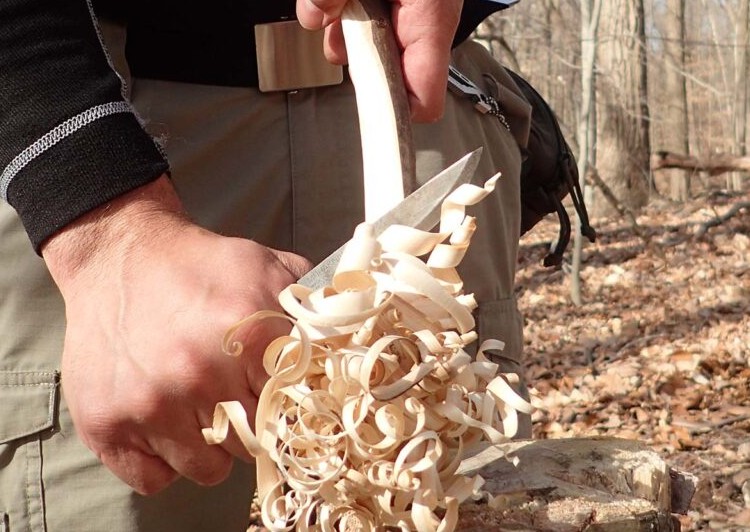
The first evening, any decent factory edge throws feather sticks off seasoned pine. The second, it slows. By the third, working resinous standing dead or wood that has frozen and thawed twice, the edge stops biting and starts skating. A field strop buys back about an hour.
The reason is geometry, not steel. Most production bushcraft knives ship at roughly 20 degrees per side behind a shoulder about 0.030 inches thick. A factory edge is set up the way a rental car is: safe in anyone’s hands, right for nobody in particular. Blades ground for this work sit nearer 0.015 inches behind the edge with a full Scandi bevel, and on the same wood they keep cutting about three days longer.
That geometry has a price, and it is worth saying out loud. A thin Scandi bevel chips if you twist it in a frozen knot, and it wants a flat stone rather than a pull-through to bring back. In two of our five winter tests we rolled an edge doing something an axe should have done.
That gap is why we stopped replacing production fixed blades and started looking at custom knives ground for camp work instead. A maker who asks what wood you cut, how cold it gets and whether you baton can grind for that answer. A factory has to grind for everyone at once.
I kept every student build log for 28 years. The ones who came back with a dull knife were not cutting more wood than the others. They were cutting the same wood with a bevel too thick to get under the fibre, so they leaned harder and rolled the edge.
Wendell Tokarz, retired outdoor program instructor, Marquette
The forecast decides the build
A shelter that works at 30°F and rain is the wrong shelter at -10°F and dry snow. We start from the sky, not from the gear list.
The order of work matters more than the materials. On every build this season we ran the same sequence:
- Pick the site for drainage and deadfall overhead, not for the view.
- Build the bed and insulate underneath it.
- Set the fire position and the reflector against the bed.
- Put the roof on last, sized to what is already below it.
The first tarp lean-to took two hours because we set the roof and then tried to fit a bed underneath. The same build in the order above now takes fifty minutes with the same two people and the same tarp.
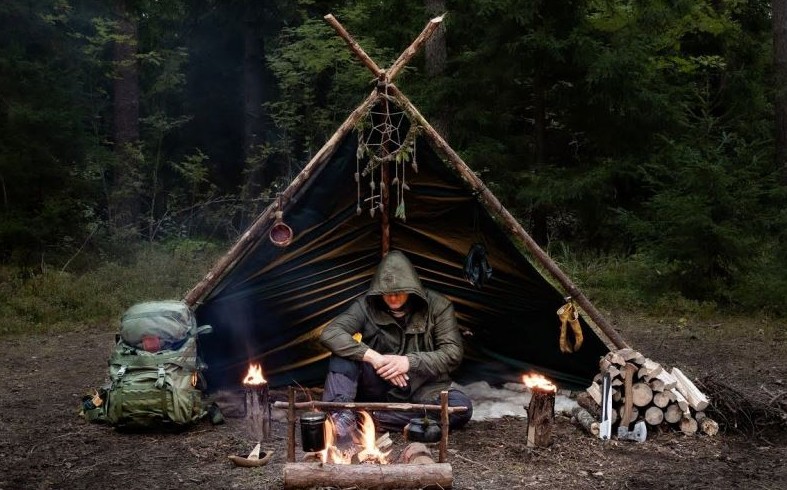
Deep winter
Below 20°F, heat stops being optional
Where the line sits between a fire outside the shelter and a stove inside one, and what each costs you in wood, sleep and setup time.
Shoulder season
October and April. Wet, windy, and the range where most people get ground insulation wrong.
18 NIGHTS
Wet spring
Snowmelt and saturated duff. Finding dry tinder when the whole forest floor is a sponge.
12 NIGHTS
Summer timber
Bugs, thunderstorms and green wood. The season that punishes a lazy tarp pitch.
9 NIGHTS
Deep winter
Dry cold, short daylight and long fire arithmetic. Twenty-two nights below zero.
22 NIGHTS
What did the last six nights actually do?
Every write-up opens with a row from this sheet. If a claim is not backed by a night on it, it does not go in.
Each row records the same seven things:
- the date and the county we were in
- the overnight low measured at camp, not at the nearest station
- what the sky did, because dry cold and wet cold are different problems
- the shelter type and what it took to build
- the heat source, if there was one
- what the cutting tools were actually used for
- anything that failed
| Date | Area | Low | Sky | Shelter | Heat | Edge work |
|---|---|---|---|---|---|---|
| 14 Jan | Baraga Co, MI | -11°F | Clear, dry snow | Snow-banked lean-to | Long fire, 7 hrs | Feather sticks, 40 pole notches |
| 02 Feb | Ottawa NF, MI | -14°F | Squalls | Spruce bough A-frame | Long fire, 9 hrs | Batoned fatwood, stropped twice |
| 27 Feb | Iron Co, WI | 3°F | Overcast | Tarp and brush lean-to | Box stove | Pot hanger, eight tent stakes |
| 19 Mar | Baraga Co, MI | 21°F | Rain to sleet | Tarp and brush lean-to | Fire and reflector | Trench candle, drip notches |
| 08 Apr | Keweenaw, MI | 31°F | Wet snow | Raised bed, flat tarp | Fire, no reflector | Bed rails, 22 cross poles |
| 26 Apr | Ontonagon, MI | 29°F | Clearing | Leaf debris hut | None | Ridge pole only, edge untouched |
Five things the sheet has told us that we did not expect
Sixty-one rows is not a study. It is enough to notice patterns that contradict what we believed going in.
- Wind beats the number on the thermometer. Our most comfortable cold night was -14°F with dead air. The worst was 19°F with a steady 20 mph across an open cut, which the National Weather Service wind chill chart puts near 3°F of felt cold.
- Build time collapses with order, not with skill. Same two people, same tarp, same site: two hours down to fifty minutes purely by changing the sequence.
- A stove is a trade, not an upgrade. It buys 20°F to 30°F inside a hot tent and costs about 14 pounds, forty minutes of setup, and getting up twice in the night to feed it.
- The ground takes more than the air does. It pulls heat out of you the way a cast iron pan pulls it out of a steak. That is contact, not air, and no amount of blanket on top fixes it. Eight inches of spruce tips underneath outperformed a second sleeping bag on four separate nights.
- Edges fail on the third day, not the first. Across nine winter trips the drop off was consistent enough that we now plan the sharpening around it.
The plot work taught me something the camping books have backwards. On a clear night the ground takes more heat off you than the air does. I would rather sleep on eight inches of spruce tips at 10 degrees than on bare duff at 25.
Maren Aho, forest research field technician, Baraga County
Recent write-ups from the sheet
Each one starts with the night that produced it and ends with what we would do differently now.
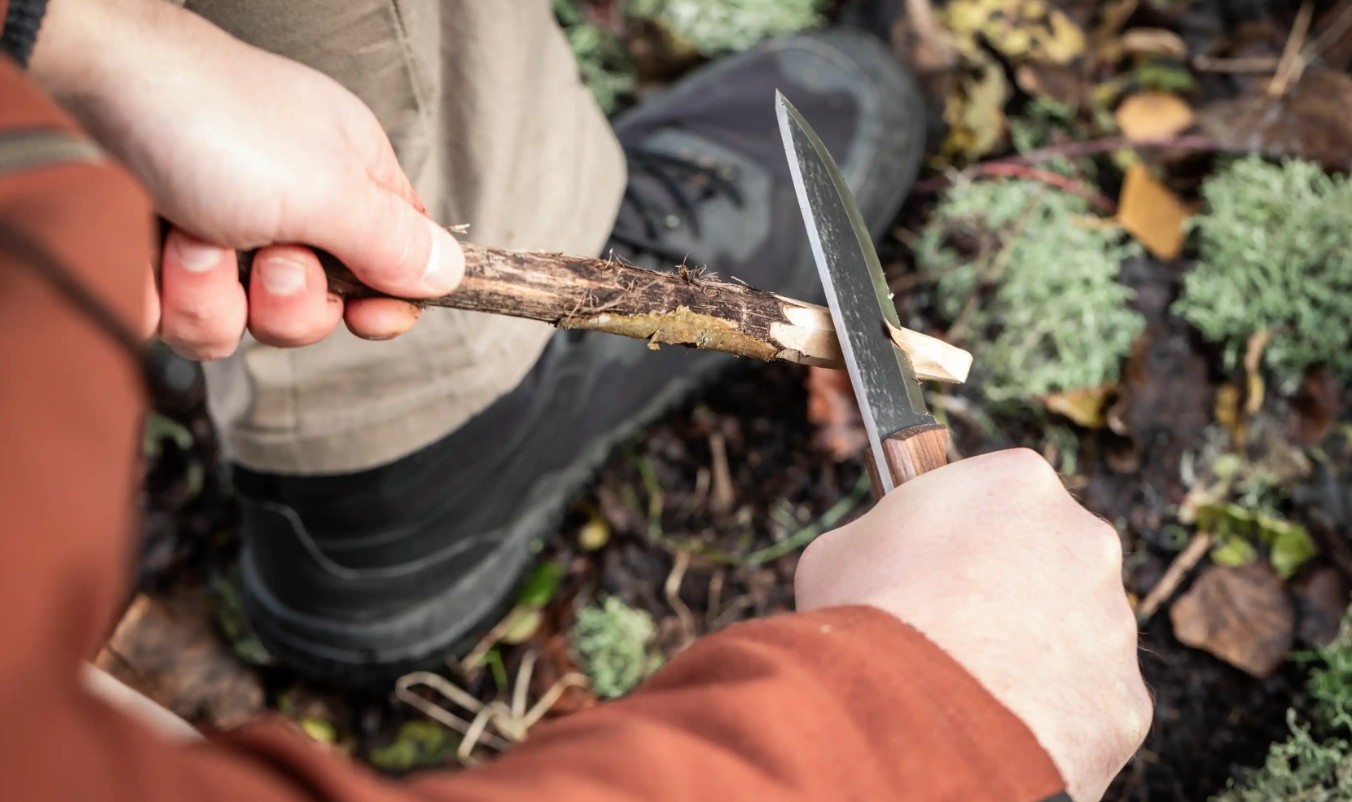
How many notches does a lean-to actually need?
We counted them across four builds. Six carry load, and everything else lashed faster than it could be cut.
08 APR · KEWEENAW · LOW 31°F
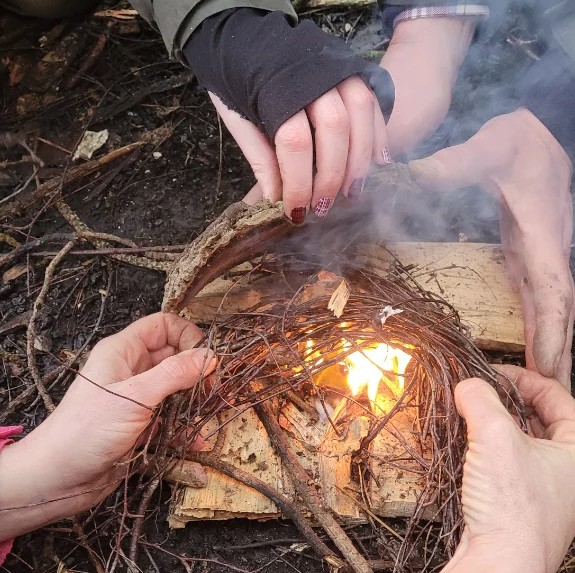
What lights when everything on the ground is wet
Six tinder sources timed on the same soaked March morning, from strike to sustained flame. Two never got there.
19 MAR · BARAGA CO · RAIN TO SLEET
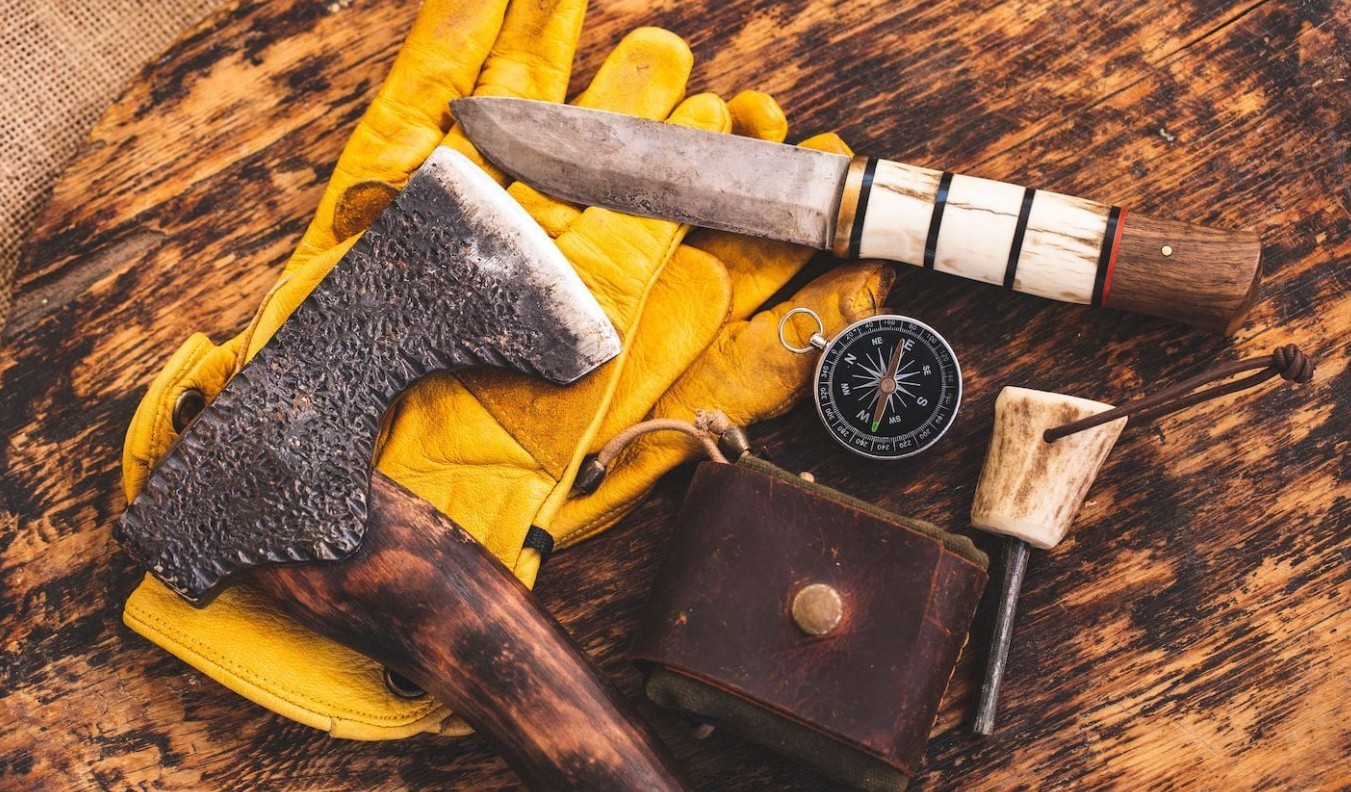
Knife, axe or saw: which one earns its weight
Three tools, 36 ounces between them, and one of them is usually cargo. The wood decides which.
19 MAR · BARAGA CO · LOW 21°F
Who writes this?
Two people, one notebook. Both of us live within an hour of the ground we write about, which is why the sheet fills up in January instead of once a summer.
Maren Aho
Field technician · Baraga County
Runs winter vegetation plots for a forest research station, which means scheduled nights out in January whether or not the weather cooperates. Writes the shelter and ground insulation material.
Wendell Tokarz
Retired instructor · Marquette
Taught the shelter and fire units in a community college outdoor program for 28 years and kept every student build log. Writes the fire, tools and edge material.
Start with the night that looks like yours
Pick a temperature and a sky from the sheet, read what we built, then read what we would build differently now.