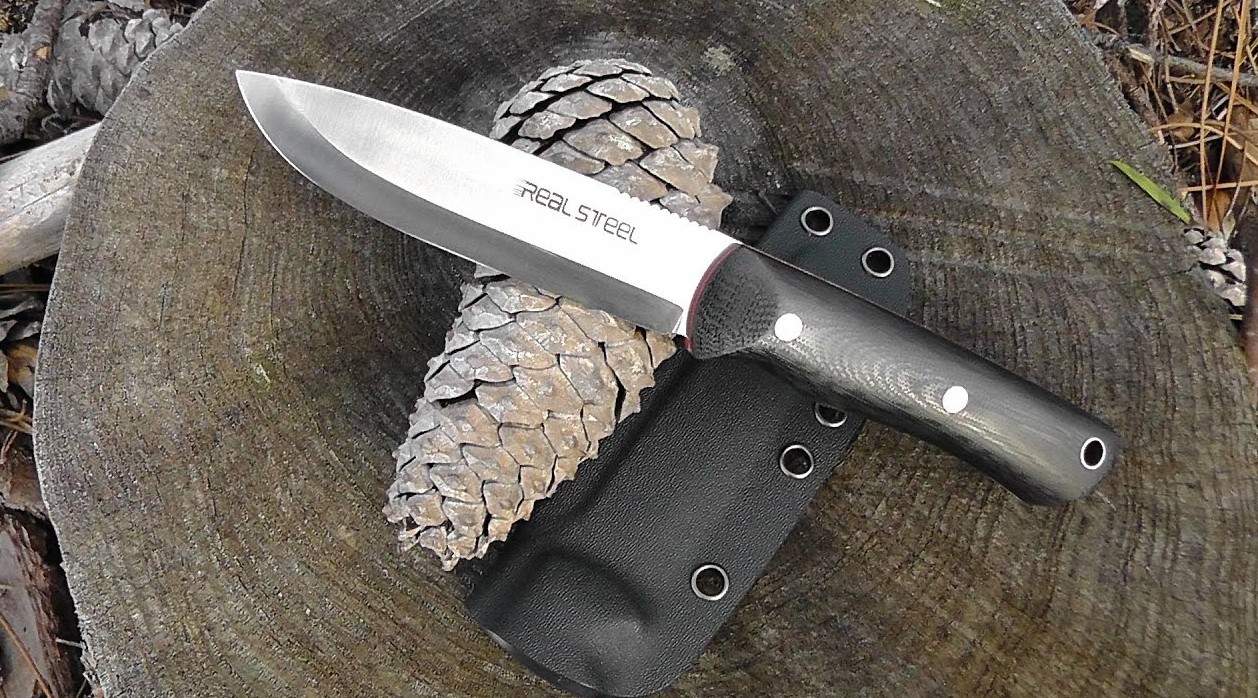
We counted every cut on a four night camp. It came to about 1,100, and two thirds of them went into feather sticks.
| Date | Area | Low | Sky | Shelter | Heat | Edge work |
|---|---|---|---|---|---|---|
| 02 Feb | Ottawa NF, MI | -14°F | Squalls | Spruce bough A-frame | Long fire, 9 hrs | Batoned fatwood, stropped twice |
How many cuts does a four-night camp actually take?
About 1,100 controlled cuts. Nine in ten were in wood, and feather sticks alone took roughly two thirds of the total.
The method was crude and that is the point. One of us carried a scrap of card in a chest pocket and made a mark after each task, then wrote the totals into the sheet before bed. It undercounts, because nobody marks the card while their hands are cold and full. Treat the numbers as a floor.
What surprised us was the distribution. Before counting we would have guessed that splitting kindling was the dominant job, because it is the one that feels like work. It came fourth. The knife spends most of its life doing something far less dramatic: shaving long thin curls off dry stock, thousands of times, in the dark, at the beginning of every fire.
| Task | Cuts counted | Wood condition | What it asks of the edge |
|---|---|---|---|
| Feather sticks | about 740 | Seasoned pine and resinous standing dead | Long clean release, no skating |
| Notch detail on frame | 22 | Green and frozen spruce | Point control, tolerance for twist |
| Points on stakes | 14 | Green hardwood | Bulk removal, forgiving |
| Splitting kindling | about 190 strikes | Standing dead, frozen through | Spine strength more than sharpness |
| Pot hanger and tripod | 6 | Green spruce | Point control |
| Cordage, food, repairs | about 30 | Rope, tape, food | Ordinary sharpness |
The jobs the knife owns
Four of them have no substitute in the pack. Everything else on the list can be done another way, usually faster.
- Feather sticks. Nothing else produces a dry ignition surface from wet stock. A saw makes dust and an axe makes chunks.
- Notch detail. The seat where a rafter meets the ridge is a controlled cut in a fixed place. An axe can rough it, only a knife finishes it.
- Points on stakes. Fast, low precision, and awkward with anything longer.
- Splitting down to a dry core. Batoning a wrist-thick round of standing dead is often the only way to reach wood that will light.
Those four are the reason a knife stays in the kit even on trips where the axe and the saw both get left at the truck. They are also the reason edge geometry matters more here than it does in a kitchen, where nobody asks a blade to make eight hundred release cuts in frozen resin between sharpenings.
Count the cuts before you argue about steel. People spend a season debating alloys and have never once written down what their knife did on a trip. The tally card tells you which twenty percent of the work is deciding your edge.
Wendell Tokarz, retired outdoor program instructor, Marquette
What the knife should not be doing
Felling, limbing anything thicker than a wrist, and prying. Each is faster with another tool, and almost all of our edge damage started with one of them.
The clearest example is on the sheet from 02 February. We needed a dead spruce down, the saw was in the other pack forty yards away, and the knife was in hand. Two minutes of batoning through a frozen knot put a visible roll in about a centimetre of edge, and the rest of the trip ran on a blade that had to be stropped twice as often. Walking forty yards would have cost thirty seconds.
Prying is worse and less obvious. Levering a stuck baton, opening a fuel can, working a stone out of a fire ring: each one loads the blade sideways, which is the single direction it is not built to resist. Tip breaks in student build logs almost always trace back to a prying job the student did not think of as prying.
Does blade length matter more than grind?
Grind decides how the blade behaves in wood. Length decides which jobs are comfortable. Grind matters more, and length sets the ceiling on what grind can fix.
A camp knife is not a scalpel and it is not a chisel. It works like a hand plane: long controlled strokes taken at a shallow angle against grain that pushes back, where the shaving has to release cleanly or the whole stroke is wasted. Planes are set by mouth opening and blade projection rather than by how big they are, and a camp knife is set the same way, by the angle and thickness at the edge.
Length still binds at the extremes. Under about 3.5 inches, batoning a wrist-thick round stops being practical because the blade cannot span the split. Over about 5 inches, notch work gets clumsy, because the hand is too far from the cut to steer it. Between those, grind decides everything.
The trade is real and worth naming. A longer blade buys you splitting capacity and costs you control in the one job that is hardest to do any other way. On a trip where the saw comes along, we take the shorter blade every time.
- Work out what your wood actually is. Resinous standing dead and frozen hardwood ask different things of an edge.
- Count which two tasks dominate. For most winter camps it is feathering and notching.
- Pick the grind for those two, not for the photograph.
- Size the blade last, and only long enough to split what you cannot reach any other way.
What changes by the third night
Nothing about the knife changes and the wood does not change either. The edge changes, and every job downstream of it gets slower.
The pattern shows up in the sheet with more consistency than we expected. The first evening, feather sticks come off seasoned pine in long unbroken curls. The second, they shorten. By the third, working resin-loaded standing dead, the edge skates instead of biting, and the same stick takes half again as many strokes. That is not a steel problem. It is a geometry problem, and we go into the measurements in the grind comparison.
It is also the reason we ended up talking to people who make knives one at a time. A maker who asks what proportion of your work is feathering rather than notching is asking the only question that changes the grind, and a production line cannot ask it. Custom knives get discussed on this site for that narrow reason, not as a status object.
- Curls shorten and start snapping instead of peeling.
- You catch yourself pressing harder, which is where the injuries come from.
- The blade wants to ride out of a notch instead of seating in it.
- A quick strop buys back roughly an hour, then less each time.
Notch work is where I notice it first, before the feathering does. A tired edge rides out of a seat instead of biting into it, and you end up steering with force rather than with the tip. That is the point I stop and sit down with a stone.
Maren Aho, forest research field technician, Baraga County
If you want the wider picture of how the knife fits with the axe and the saw, that is in the tool triage write-up, and the whole structure sits under camp craft.